
Short sale leads are back on the table, and there are more of them than there have been in years. Foreclosure filings hit 118,727 properties in the first quarter of 2026, up 26% year over year and the highest quarterly level in six years (ATTOM). That is a wave of underwater homeowners who need an agent who knows how to work a distressed sale. The problem: most agents chase them the same way, buying the same list everyone else bought. This guide covers 8 real sources for short sale leads, what each one costs, and how to convert them into signed listings.

What Is a Short Sale Lead (and Why It Matters in 2026)
A short sale lead is a distressed homeowner who owes more on their mortgage than the home is worth and is likely to sell for less than the loan balance, with the lender’s approval. These owners are usually 30, 60, or 90 days behind on payments, or already have a Notice of Default on record. That financial pressure is what makes them motivated.
Why the niche is worth farming: fewer agents fight for these listings, the sellers are already motivated, and you can earn on both sides if you also represent the buyer. The 26% year-over-year jump in foreclosure filings (ATTOM) means more of these owners enter the pipeline every month.
It also pays to signal you know the process. NAR’s Short Sales and Foreclosure Resource (SFR®) certification teaches you to qualify sellers, build a short sale package, and negotiate with lenders. It reads as competence to a homeowner who is scared and behind. If you want the mechanics of the stage before default, here is how pre-foreclosure works.
Short Sale vs. Pre-Foreclosure Leads: Are They the Same?
They overlap, but they are not identical. Pre-foreclosure means the legal foreclosure process has already started, usually marked by a filed Notice of Default. A short sale is a resolution, where the lender agrees to accept less than the full mortgage balance so the home can sell.
The common thread is negative equity: nearly every short sale starts with an underwater owner. But not every pre-foreclosure ends in a short sale. Some owners reinstate the loan, refinance, or get sold at auction first.
| Attribute | Pre-Foreclosure Lead | Short Sale Lead |
|---|---|---|
| Trigger | Notice of Default filed; legal process started | Owner owes more than the home is worth; lender approval needed |
| Timing | Early, right after the NOD | Once the owner decides to sell below the balance |
| What the homeowner wants | Any way to avoid losing the house | A clean exit that protects their credit |
8 Best Sources for Short Sale Leads
The 8 sources below run from free but labor-heavy to paid but fast, and finish with the one that pays back for months: inbound. Don’t treat this as a menu where you pick one. The agents who dominate the niche stack two or three: a foundation data source, an outreach method, and a long-term asset only they own. For the wider view of paid and free options, see these motivated seller lead channels.
1. Public Records & County Filings (Notice of Default)
This is the free, at-the-source option. Your county recorder’s office logs Notices of Default, Lis Pendens, and trustee sale dates, all public. Title insurance companies also track these filings and sometimes share lists with agents they already work with.
The upside is obvious: it costs nothing and the data is as fresh as it gets. The downside is the labor. Records rarely include a working phone number, so you will need skip tracing to reach anyone. A practical tip: focus on filings 14 to 60 days old. Fresh enough that the owner is motivated, not so fresh they are still in denial. The same county records feed the deals in where to find foreclosure listings.
2. The MLS and Portals (Zillow, Realtor.com, RealtyTrac)
The MLS and the big portals let you filter for short sales that are already listed. Zillow, Realtor.com, and RealtyTrac all have distressed-property sections. This is useful on the buyer side and for spotting expired or withdrawn short sale listings you can try to recapture.
The catch: an already-listed short sale belongs to another agent. Treat this as a market and comparables source more than a source of fresh leads. Cross-reference the expired listings, because those are the owners whose last agent could not get the deal closed.
3. Short Sale Data Lists & Lead Providers
Data and prospecting platforms package the public records so you don’t have to dig. Services like REDX and Vortex, PropStream, PropertyRadar, Landvoice, and Vulcan7 deliver lists with the mortgage balance, delinquency status, equity position, and contact data, updated daily across most markets. REDX, for example, describes short sale leads as owners 30, 60, or 90 days late and at risk of a Notice of Default.
The upside is scale and freshness. The downside is that these lists are not exclusive. Every agent farming your area buys the same data, so the winner is whoever reaches the owner first and sounds the least like a salesperson. That puts your speed and your script under real pressure.
4. Direct Mail to Pre-Foreclosure Homeowners
Direct mail still works on this audience because many distressed owners avoid the phone. Send letters or postcards to a pre-foreclosure list, but lead with empathy, not the word “foreclosure.” A soft message, repeated over a sequence rather than one-and-done, with a clear and low-pressure way to respond.
Response rates are low, usually 0.5% to 2%, so this is a volume and follow-up game. Providers like PropertyRadar publish preforeclosure lists and marketing guidance you can model your sequence on. Budget for at least three touches before you judge the results.
5. Live Lead Transfer Services
A live lead transfer service generates interest, pre-qualifies the homeowner, and connects them to you on a live call, warm. The appeal is speed: you are talking to someone who already raised their hand, which converts better than a cold list.
The trade-off is cost and consistency. You pay more per lead, and quality swings hard from one provider to the next. Before you commit, ask for a trial period and measure the number that matters, cost per closed listing, not cost per lead.
6. Referral Networks (Attorneys, Lenders, Probate Pros)
The people who know a homeowner is about to lose the house before anyone else are bankruptcy and foreclosure attorneys, loss mitigation staff at lenders, and probate professionals. Build relationships with them and you get leads before they ever hit a public record.
This is slow to build and impossible to fake. You earn it by referring business back, by being the agent they trust with a sensitive distressed case, and by showing up in the trade organizations and local groups where these professionals already talk. The payoff: the highest-quality, lowest-cost leads you will find, because a warm referral arrives pre-trusted.
7. Cold Calling & Skip Tracing Distressed Owners
Take a pre-foreclosure list, run it through a skip-tracing tool like REDX or PropStream to get phone numbers, and call. It is the most direct path from a filing to a conversation, and the hardest on your nerves.
Open with empathy, not a pitch:
“Hi, is this [name]? I work with homeowners here in [area] who are dealing with a tough mortgage situation, and I help people understand their options before things get worse. Do you have two minutes?”
Follow the rules every time: scrub against the Do Not Call registry, call only during legal hours, and keep the tone compassionate (more on this in the compliance section below). Expect a lot of no. This works on volume and a thick skin. A tight qualifying framework helps, like these questions that qualify a motivated seller.
8. Inbound SEO & AEO: Getting Sellers to Find You
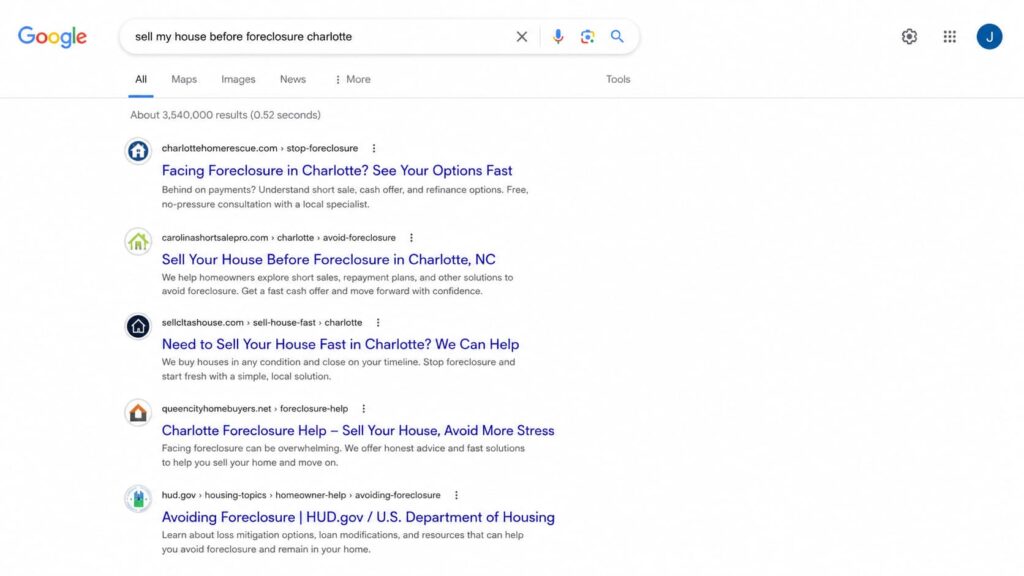
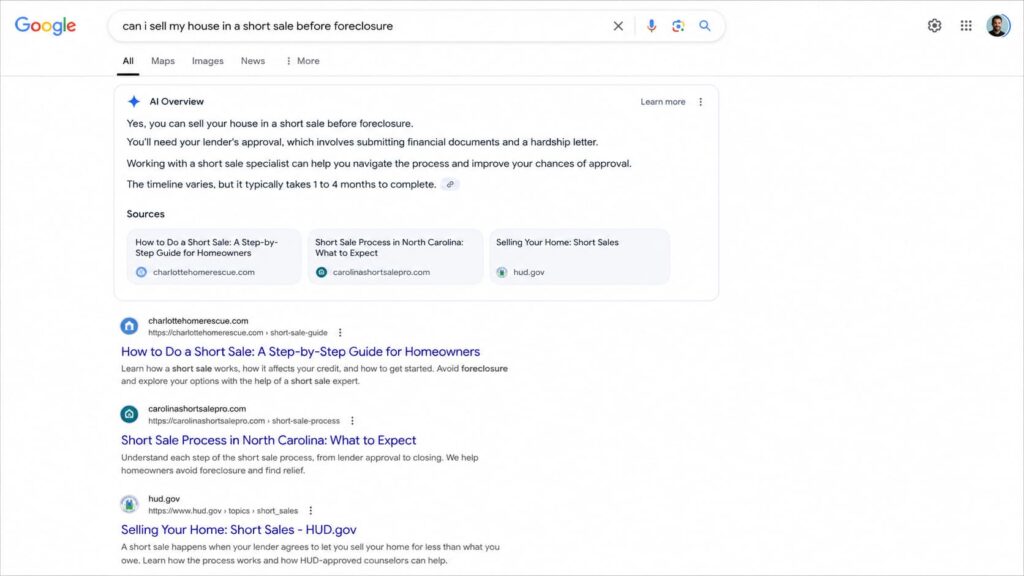
Every source above shares one weakness: you are chasing owners who never asked to hear from you, on a list your competitors also bought. Inbound flips it. Instead of buying the same data as 50 agents, you build content that ranks for what distressed sellers actually type: “how to stop foreclosure in [city],” “can I sell my house in a short sale,” “who buys homes in pre-foreclosure.”
Those searchers are already looking for a way out, in Google and increasingly inside AI assistants. That intent shows up in the numbers. One 2025 study found visitors arriving from ChatGPT converted at 15.9%, against 1.76% for Google organic, with Perplexity at 10.5% (Seer Interactive). The reason is simple: the seller worked through their options inside the conversation, so by the time they reach you they are ready to talk.
An inbound lead is exclusive and high-intent. Nobody else got the same one. The way you earn it is a page for every city you serve, FAQs written to win featured snippets, and citation-friendly schema so AI search can quote you. It compounds: you build it once and it keeps ranking for months. This is exactly the kind of asset BASEO builds for operators in this niche, content mapped to each market and each seller situation, formatted to rank and to get cited in AI Overviews. If you want the mechanics first, start with SEO for a real estate website.
How Much Do Short Sale Leads Cost?
It depends entirely on the method, and the range is wide. Public records are free if you count your time as free. Data-list subscriptions run roughly $40 to $100 per month plus skip-tracing costs. Direct mail runs about $0.50 to $1.50 per piece. Live lead transfers can run $20 to $60 or more per lead. Inbound SEO is an upfront investment that lowers your cost per lead the longer it runs.
| Source | Typical cost | Notes |
|---|---|---|
| Public records | Free (your time) | Needs skip tracing to reach owners |
| Data lists / skip tracing | ~$40–$100/mo + skip fees | Shared with every other agent |
| Direct mail | ~$0.50–$1.50 per piece | Volume + repeat sequence |
| Live lead transfer | ~$20–$60+ per lead | Warm, but quality varies |
| Inbound SEO / AEO | Upfront, then declining per-lead | Exclusive and compounding |
The number that matters is cost per closed listing, not cost per lead. One short sale commission covers many months of any source on this list. If a $60 live-transfer lead or a season of direct mail lands one closing, the math already works. Prices shift by market and provider, so treat these as starting points and verify before you buy. For a deeper split of paid versus free, see free vs. paid seller leads.
How to Convert Short Sale Leads Into Listings
Speed wins first. Distressed owners talk to whoever answers, and the research on lead response is brutal: reaching out within the first five minutes makes you far more likely to actually connect and qualify the lead (iHomefinder). Miss that window and someone else has the listing conversation.
Once you are talking, educate before you pitch. Many owners don’t know that a short sale protects their credit far better than a foreclosure does. Frame yourself as the person who coordinates with the lender’s loss mitigation team and manages the paperwork, and set the timeline honestly: a short sale often takes 30 to 120 days because the bank has to approve it. Rapport closes these, not pressure, and an SFR® certification gives a nervous seller a reason to trust you.
A Soft-Open Script That Doesn’t Sound Predatory
“Hi [name], my name is [your name] and I’m a local agent who specializes in helping homeowners in a tough spot with their mortgage. I’m not calling to buy your house. I help people understand the options that protect their credit, including one a lot of folks don’t know about. Would it be helpful if I walked you through it on a quick, no-pressure call this week?”
Compliance: Marketing to Distressed Homeowners the Right Way
Marketing to owners in default is regulated, and the rules bite. Before you launch anything, know where the lines are:
- Do Not Call. Scrub every calling list against the DNC registry and stick to legal calling hours. Skip tracing does not exempt you.
- CAN-SPAM. Any email campaign needs a real physical address, a working unsubscribe, and honest subject lines.
- State foreclosure laws. Several states tightly regulate contact with owners in default. California, for example, requires a lender to contact the borrower before filing a Notice of Default, a rule that began with SB 1137 and now lives under the California Homeowner Bill of Rights. “Foreclosure consultant” statutes in other states restrict what you can offer and charge.
- Tone. Predatory messaging is both a compliance risk and a conversion killer with this audience.
When in doubt, lean on NAR’s short sale workflow and run your campaign past a local real estate attorney. This is general information, not legal advice, and the rules vary by state.
Which Short Sale Lead Source Should You Choose?
Don’t choose one. Build a layered system. Use a daily data platform as your foundation so you never run dry, add an outreach method like direct mail or calls aimed at filings 14 to 60 days old, and build an inbound SEO and AEO asset underneath it all so exclusive leads come to you over time. Your budget and how many hours you can give to prospecting decide the mix.
| Source | Cost | Speed | Exclusivity |
|---|---|---|---|
| Public records | Free | Slow (manual) | High until skip-traced |
| Data lists | Low monthly | Fast | Low (shared) |
| Direct mail | Medium | Slow | Medium |
| Live lead transfer | High per lead | Instant | Low to medium |
| Referral networks | Low | Slow to build | High |
| Cold calling | Low + time | Fast | Low (shared list) |
| Inbound SEO / AEO | Upfront | Builds over months | High (exclusive) |
For how these stack against every other channel that makes the phone ring, see marketing channels that compound.
Turn Short Sale Interest Into Inbound Leads With TheBaseo
Every list in this guide is one your competitors can buy too. The one channel they can’t share out from under you is the content that ranks when a distressed seller in your market searches for help. That is what BASEO builds: SEO, AI search optimization, and programmatic city pages that put you in front of foreclosure and short sale sellers before anyone else, with leads that are exclusive, not resold.
BASEO works exclusively in this distressed-property niche, so the pages already speak your market’s searches and seller situations. If you want to see where you stand, the audit shows you exactly what it would take to rank. Free, in writing, no call required.
See what it takes to rank for distressed-seller searches in your market →
Frequently Asked Questions
Quick answers to the questions agents ask most about short sale leads.
A short sale lead is a homeowner who owes more on their mortgage than their home is worth and is likely to sell for less than the loan balance with lender approval. These sellers are usually behind on payments or in pre-foreclosure, which makes them motivated prospects for agents.
Free short sale leads come from public records at the county recorder’s office: search for Notices of Default, Lis Pendens, and trustee sale filings. The MLS, title companies, and referral networks with attorneys and lenders are also low- or no-cost sources, though they require more manual effort.
They overlap but aren’t identical. Pre-foreclosure means the legal foreclosure process has started; a short sale is a resolution where the lender accepts less than the mortgage balance. Most short sales involve underwater, pre-foreclosure homeowners, but not every pre-foreclosure ends in a short sale.
It ranges widely. Public records are free, data-list subscriptions run roughly $40 to $100 per month, direct mail costs about $0.50 to $1.50 per piece, and live lead transfers can run $20 to $60 or more per lead. Measure cost per closed listing, not per lead, since one commission covers months of prospecting.
Yes, for agents willing to work distressed niches. Short sale sellers are highly motivated, competition is lighter than standard listings, and foreclosure filings rose about 26% year over year in early 2026. Success depends on fast follow-up, empathy, and understanding the lender approval process.
The bottom line
The distressed pipeline is the biggest it has been in six years, but almost every source that feeds it is a shared, cold list your competitors buy too. The agents who actually own this niche stack a foundation data source and an outreach method on top of one thing nobody can take from them: an inbound asset that makes motivated sellers find them first.
Before you spend another dollar on a list 50 other agents already have, it is worth knowing what it would take to rank for the searches those sellers are already making in your market. That is exactly what a BASEO audit lays out. Free, in writing, delivered without a sales call, and yours to keep either way.
See what it takes to rank for distressed-seller searches in your market →